Today we decided to purchase a prepared papaya half with limes laid on top at Whole Foods. The flesh was orange and rather mushy to the touch, and emanated very little odor. The fruit was easily spooned out and had a stringy, but very soft texture. The taste is quite subtle, we found. My first bite did not afford me any opinion, though my second bite revealed an unpleasant vegetable-y flavor somewhat reminiscent of a very bland watermelon with hints of carrot. Subsequent bites continued to establish the flavor as both elusive and illusive, so it was clear that some mutual mastication was needed. Others that tried it spoke of coffee-like undertones and one remarked that it tasted like a tanning salon (the meaning of this will not be explored here). I also definitely detected a coffee-like undertone to certain bites. I suspect that the tenuous taste varied among different locations of the flesh. However hard to detect the exact taste it was, it was clear that we did not enjoy this fruit and would not attempt to eat it plain and raw again. The function of the limes is still not understood, as only flesh very near to the limes acquired their flavor.
-Anthony
July 7, 2010
Edamame
On an extremely humid day trip to Cambridge, we decided to check out The Ginger Exchange in Inman Square. One of the many items I ate for lunch included steamed edamame. Edamame is basically a baby soybean and is served on a plate while they are still in their pods. The first time I tried edamame was in Seattle at a sushi restaurant. I made the embarrassing mistake of putting the whole thing in my mouth (pod and all) and trying to eat it that way. I learned right away after I got looks from others sitting with me at the table that I was supposed to eat only the actual beans that are inside the pod.
Aware of how to eat edamame from that day in Seattle on, I was excited to try some more edamame at lunch today. Once popped open, there are usually two or three beans inside of each pod. Then you simply pop each bean in your mouth and enjoy. They taste very fresh and similar to any other soy bean I have ever eaten. They aren't soft like kidney or garbanzo beans, but are firm and somewhat crunchy. Edamame is a little bland so I am thinking up a way to create an edamame salad. Let me know if you have any suggestions!
-Bri
Aware of how to eat edamame from that day in Seattle on, I was excited to try some more edamame at lunch today. Once popped open, there are usually two or three beans inside of each pod. Then you simply pop each bean in your mouth and enjoy. They taste very fresh and similar to any other soy bean I have ever eaten. They aren't soft like kidney or garbanzo beans, but are firm and somewhat crunchy. Edamame is a little bland so I am thinking up a way to create an edamame salad. Let me know if you have any suggestions!
-Bri
Raspberries
On a journey up to The Big Apple in Wrentham, Massachusetts, we decided that we would pick raspberries for the first time. The raspberries were strewn very sparsely amongst the short bushes so we spent a while trying to fill our container. Once we brought them home and thoroughly washed them, we left them out so we could eat them as we pleased. The raspberries supplied us with a sweet aroma similar to other berries I have tried. They are very sweet but at the same time very tart depending on their ripeness. They are very seedy so they are not as easy to chew as other berries but nonetheless, I enjoyed them.
Worried that the raspberries would go bad before we finished them all, we decided to try making some homemade jam. After looking at some recipes online, we got a general idea of ingredients to use and put together our own recipe. We decided to only use a small portion of our remaining raspberries because we were unsure as to how the jam would come out.
Raspberry Jam
1 Cup of Raspberries
2/3 Cup of Sugar
2/3 Tbs of Lemon Juice
Dump the raspberries in a medium sauce pot and mush them until they are evenly flattened and mashed against the bottom of the pot. Next, boil the raspberries with the sugar. Once the mixture starts to boil, add the lemon juice. Keep boiling until it gets to the consistency you like. Then pour it into a container and refrigerate until it is cool enough to eat.
Enjoy!
-Bri
July 6, 2010
Peaches

Peaches are perhaps the most fickle fruit I've yet tried. Maybe I'm just being picky, but the ones I had prior to tonight have been either too ripe, or not ripe enough. With the inconsistency of supermarket peaches, I suspect this is an easy mistake to make. Peaches that are not ripe enough are bland and have a difficult texture somewhat akin to a dry apple. Peaches that are too ripe have an overly slimy texture. I've learned to determine ripeness by smell and by firmness. Ripe peaches have an unmistakable, readily evident aroma, and give a bit when squeezed but aren't too mushy. The peach I bought tonight possessed such qualities and because I did not have to worry about the texture, I was able to focus on the taste. The best way to eat a peach, in my humble opinion, is just to grab it and take a bite of it. The skin adds a slightly annoying texture, but it is certainly tolerable. If not, it is easily peeled off with a knife. The taste of a peach is one of those which is too unique to easily describe in terms of familiar tastes. It is sweet, juicy (extremely so; have a napkin handy), and tangy and is truly one of the best hand-held fruits out there. The name of the variety I tried escapes me, but it was a standard shape and had a yellowish interior. There are various other cultivars out there too, such as donut peaches and eastern peaches, that I may well write about in the future.
-Anthony
June 25, 2010
Coconuts
On our next adventure to the supermarket, we searched for another tropical fruit to try. This time, we stumbled upon the coconuts. They looked appealing and seeing them reminded me of being somewhere tropical, instead of being in the currently dismal weather of Boston. Anthony and I looked at each other and immediately knew that this had to be the fruit we were going to try next. Back in the kitchen, we struggled to get the coconut open. We tried sawing it open with a knife. Of course, the shell did not budge. Frustrated, we decided to try with a hammer and screw driver. With one swift bang by the hammer to the screw driver, the shell cracked and an even line formed around the middle of the coconut. With a pull we got the two halves separated. Immediately, a transparent white-colored liquid dripped out from inside. Eager to try the milk, I held a the half containing liquid up to my lips and took a sip. I was quickly repulsed by the bitter tasting liquid. Maybe the second sip would be better? Nope. I gave up on drinking the milk. After dumping out the liquid, I decided to slice off a piece of the flesh. Plopping the piece into my mouth, I was greeted with an unusual texture and a bland taste. After chewing on it for a few seconds, I had to spit it out. Quite disappointed with the coconut, but enjoying the appearance of the fruit, we decided to create a candle holder out of the coconut (see picture above). Although I would never buy this fruit again to eat, I did enjoy the fresh and tropical aroma that the fruit released.
-Bri
June 15, 2010
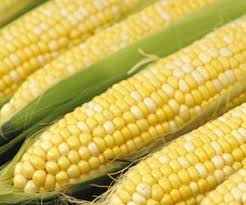
Corn On The Cob
-Anthony
June 11, 2010
The Pineapple

On a whim, I'd decided to purchase a large pineapple from a local supermarket. I'd never really tried pineapple in its own rite, though I am of course familiar with its flavor. The first obstacle we encountered was the stubborn form of the pineapple, which would not reveal its fruit without a fight. Much fruit was wasted the first few times we slaughtered a pineapple, but we quickly developed a skill for preserving it. Perhaps the most obvious characteristic of the pineapple was its extreme juiciness. Cutting a pineapple invariably inundated the work area with the acidic, sweet smelling liquid. After the messy task of cutting was completed, we were left with several ring-shaped pieces. The first bite into the pineapple flesh could only be described as a explosion of sweet, delicious flavor quite unlike any other fruit we've tasted. Needless to say, the rest of the fruit did not last long on our plate. Eat bite brings with it so much juice that it almost seems as though eating pineapple is a hydrating experience. The ambrosial taste is best described as cool, sweet, and refreshing and cannot be compared to any other fruit. The texture of the flesh is somewhat awkward and stringy, but the taste more than makes up for this fact. Riper, more mature pineapples have a softer, more pleasant texture and are even sweeter and more delicious.
Notes:
- Pineapples do not truly ripen after being picked, so only ripe ones should be purchased.
- Ripe pineapples will have a golden color to them, will give slightly to pressure, and have a strong, pleasant aroma.
- Pineapples cook wonderfully and can be enjoyed on pizza and in many other meals. Pineapple juice is used as a meat tenderizer because it contains enzymes which break down protein.
- To cut: Remove leaves. Remove 1 inch section from the top and bottom of pineapple. Cut along the sides to remove skin, cutting deep enough to remove all seeds. Cut the cylinder into circular slices. The core can be removed with a knife, or cubes of fruit may be taken from around it.
Subscribe to:
Posts (Atom)


